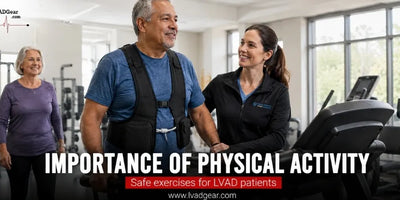
Importance of Physical Activity and Safe Exercises for LVAD Patients
LVAD patients usually have to experience a completely modified lifestyle, as it involves carrying and managing the LVAD device all the time without any breaks or delays. But we cannot change the fact that LVAD has improved the symptoms associated with heart failure. So, we can say that you have been given a second chance, and you should make it even better by participating in physical activities and exercises.
If you have been wondering whether it is safe for me to exercise with an LVAD, then the short answer is yes, you can. In fact, staying active is essential, and healthcare professionals recommend that LVAD patients participate in rehabilitation exercises.
Living an Active Life after an LVAD
Before an LVAD, most of the patients with heart failure are unable to perform even the simplest tasks like climbing stairs, walking to the market, or carrying groceries. But after LVAD, they have experienced significant improvement in their symptoms and their quality of life.
Although life after LVAD is not the same as before, it is usually considered a new normal for the patients. You need to carry external components of LVAD, like batteries and the controller, at all times and need to follow a care routine for the driveline to keep you and your device safe. However, despite all these challenges, your doctor will encourage you to actively participate in physical activity to stay active, but within safe boundaries. It can be challenging at the start, but patients and caregivers usually learn with time to stay active without compromising on the device’s safety.
Why is it Important to Stay Active after an LVAD?
Just walking and getting up is not a goal after LVAD implantation; the goal is to support recovery and improve long-term quality of life. Let’s discuss some of the benefits of staying active after an LVAD to understand why it matters:
Strengthens the Cardiovascular System
Even after having the support of the LVAD device to pump blood throughout the body, your heart muscles and blood vessels benefit from regular and gentle exercise. Physical activity improves circulation and ultimately reduces the overall workload on your body.
Rebuilds Muscle Strength
Due to an inactive lifestyle and poor blood circulation before LVAD, patients experience muscle loss. And after LVAD, when patients are involved in exercises, it helps them regain the strength of their muscles.
Boosts Mental Health and Emotional Well-being
End-stage heart failure is not just about your physical health, but it also affects your mental health. It is proven that exercise helps boost mood and reduce anxiety, so engaging in physical activity after LVAD gives patients a sense of control and accomplishment.
Improves Functional Capacity
Exercise improves the functional capacity of the patient, which means you will be able to do more activity without getting exhausted.
Enhances Sleep Quality
Physical activity also improves sleep quality, which helps in improving mental health and promoting recovery.
Prepares the Body for Transplant
For patients who are using LVAD as a bridge to transplant, physical activity helps them prepare for heart transplant surgery.
Staying Safe While Staying Active
Recommending physical activity after an LVAD does not mean compromising on the device’s safety, so you need to secure your device before you get involved in physical activity. The LVAD device has external components that you need to protect by all means.
The driveline cable that connects your LVAD pump inside the heart to the controller outside is one of the most delicate sides, as sudden twisting and pulling can cause serious complications, including driveline damage and infection. Similarly, you need to protect your batteries and the controller you are carrying against your body.
Keeping yourself safe during activity is more about how you do it rather than just what you do. In this matter, you can take the help of proper LVAD-specific clothing, such as an LVAD shirt or an LVAD vest, during exercise that keeps the LVAD device in place and remains stable even while giving you the freedom of movement. An LVAD gear is built with designated pockets to carry your device for you and holds driveline and wires to prevent damage or accidental tugging. However, you need a professional’s advice before starting exercise and always perform under supervision, especially in the early stages.
What Type of Exercises Can be performed after an LVAD?
The good news is that there is a range of exercises suitable for LVAD patients. You need to start with some light exercises and progress gradually under the supervision of your healthcare team. Here are some of the exercises that are considered safe for an LVAD patient:
Walking: All healthcare professionals usually start with walking, as it is a low-impact and easy-to-understand activity for patients. In the early phase of recovery, patients begin with short walks, which can be increased gradually as their fitness improves.
Stationary Cycling: An option of stationary cycling is an excellent and safe option, as it improves cardiovascular health without the risk of falling or putting the device at risk.
Light Stretching and Flexibility Exercises: Light stretching exercises improve flexibility that can help with overall mobility. However, stretching techniques should be performed by a medical professional or physiotherapist.
Resistance Training with Light Weights: In the recovery phase, when your doctor considers it essential, they can introduce light resistance exercises to increase muscle strength in the arms and legs.
Physiotherapy and Cardiac Rehabilitation: One of the most effective interventions for LVAD patients is cardiac rehabilitation. This structured program of exercises is supervised by a physiotherapist and is a combination of patient education, pain management, breathing exercises, and strength training, which helps improve the overall quality of life of the patient.
Precautions of Exercises with LVAD
Not all exercises are suitable, and some activities carry specific risks for LVAD patients. Being aware of these is just as important as knowing what to do.
What to Avoid:
-
Contact sports such as football, rugby, or martial arts should not be performed, as they carry the risk of impact to the chest and abdomen.
-
Lifting heavy weights can increase pressure inside the chest, so it is also a risk to perform such exercises.
-
Swimming is restricted, as it involves submerging the body in water, which can damage the device and can increase the risk of infection at the driveline site due to moisture.
-
High-intensity interval training (HIIT) or very high-intensity cardio without proper supervision can be risky, so you should avoid engaging in such exercises.
-
Try to avoid sudden movements like bending or twisting that can cause pulling or tugging of the driveline.
What Requires Supervision?
-
In the early stage of recovery, every exercise should be performed under the supervision of a physiotherapist.
-
In resistance training, the weight should be increased gradually, and the right technique should be performed that you can tolerate.
-
Outdoor activities like hiking and hunting should be performed with proper preparation, like wearing an LVAD HeartMate multi-pocket vest, specifically designed for these activities.
-
Always exercise with your LVAD controller fully charged and accessible, and always carry your LVAD card with instructions in case of emergency.
LVAD-specific Clothing for an Active Lifestyle
One of the most important aspects of staying active is to wear the right LVAD gear, which can actually carry and protect your LVAD batteries and the controller while you engage in exercise. We know that simple, regular clothing cannot help you here, and you need LVAD accessories that are purposely built to provide both safety and comfort during exercise. Below are some of the LVAD clothing options at LVADGear that offer easier ability while providing safety:
Exercise-friendly LVAD clothing at LVADGear
LVAD HeartMate Harness: The HeartMate Harness is designed to keep your controller and batteries snug against your body during physical activity. It distributes the weight evenly and minimizes movement of the driveline during exercise.
LVAD HeartMate Unisex Active Pack: Built for movement, the Unisex Active Pack is suitable for patients who want a secure option during exercise. It holds the controller and batteries in place while allowing a full range of motion.
LVAD HeartMate Men’s Textile Vest: For patients who prefer a vest-style carrier, the HeartMate Men's Textile Vest offers a comfortable and discreet way to carry LVAD equipment. The textile vest is a lightweight and breathable option, which makes it suitable for both moderate physical activity and daily wear.
LVAD HeartMate Men’s Active Life Vest: Specifically designed with an active lifestyle in mind, this LVAD Active Life Vest provides support and stability for the LVAD device during exercise movements.
Final Remarks
Staying active after getting an LVAD is very important for your health and well-being. Regular exercise can help improve your heart health, rebuild your muscle strength, and boost your mood. Even though life with an LVAD can be challenging, it offers you a chance for a better quality of life. Remember to take care of your device while being active and consult with your healthcare team about the best exercises for you. By staying active safely, you can enjoy a more fulfilling life after your surgery.
FAQs
Can LVAD patients swim?
Swimming or submerging the body in water is not recommended for LVAD patients. However, it may be possible for some patients under very specific conditions and with proper waterproofing precautions.
Will exercise help me qualify for a heart transplant?
Improving physical fitness while on LVAD can help in recovery and for heart transplant eligibility. However, you need to consult with your doctor for an exercise program to prepare for a transplant surgery.
How soon after LVAD implantation can I start exercising?
Although every patient is unique and the time can vary for each patient, most of the rehabilitation exercises start within a few weeks of implantation.
What should I do if I feel unwell during exercise?
Stop immediately if you feel unwell during exercise. Sit or lie down in a safe position, check your device for alarms, and contact your LVAD emergency services if the device has any problems.
Prev post
Can You Do CPR on an LVAD Patient? What You Need to Know
Updated on 23 May 2026
Next post

Registered Nurses Day 2026: Supporting the Heroes behind LVAD Patient Care
Updated on 29 April 2026